
行业新闻
Green Transition: Sustainable Pathways for Industrial Electrical Engineering
日期:2025-12-01 浏览次数:178
China's Green Transformation in Manufacturing: The Practical Path of Industrial Electrics and Renewable Energy
Amid the deepening of global climate governance and the acceleration of energy transition, green and low-carbon development has become the core direction for the transformation of the manufacturing sector. As a crucial global manufacturing force, China is prioritizing green development to drive industrial structure upgrades, offering a practical pathway for global sustainable development. In this wave of transformation, technological innovation and model upgrading in the fields of industrial electric control and renewable energy are emerging as key supporting pillars.
I. Core Drivers: Three Key Pillars of Green Transformation
1. Green Technology Innovation Leading Industrial Upgrading
Technological innovation is the core impetus for the green transformation of manufacturing. China has integrated green technology innovation into its national innovation system, achieving significant breakthroughs in both new energy and the green retrofitting of traditional industries: the global average Levelized Cost of Electricity (LCOE) for wind and solar power technologies has significantly decreased; full mastery of key technologies such as hydrogen-based metallurgy, green ammonia synthesis, and Carbon Capture, Utilization, and Storage (CCUS) has been achieved, laying the foundation for deep industrial decarbonization. Numerous enterprises are actively engaged in green technology R&D, promoting the large-scale application of innovative achievements in industrial scenarios.
2. Comprehensive Establishment of a Green Manufacturing System
China has established a complete green manufacturing system covering green factories, industrial parks, supply chains, and products, integrating environmental protection concepts throughout the entire industrial process. Thousands of green factories, hundreds of green industrial parks, and green supply chain enterprises have been cultivated, and tens of thousands of green products have been promoted. The output value of green factories accounts for a significantly increasing proportion of the total manufacturing output value. Green industrial parks outperform the national average in energy consumption, water usage, and solid waste utilization efficiency, setting benchmarks for low-carbon development across the industry.
3. Deepening Green Supply Chain and Full Lifecycle Management
An increasing number of enterprises are incorporating green design and procurement into supply chain management, promoting synergistic upgrades across the upstream and downstream. Industry leaders are pioneering the management of product full lifecycle carbon footprints, advancing the circular economy model, building product recycling and reverse logistics networks, and strengthening the resource utilization of key products to form a green closed loop of "production-consumption-recycling."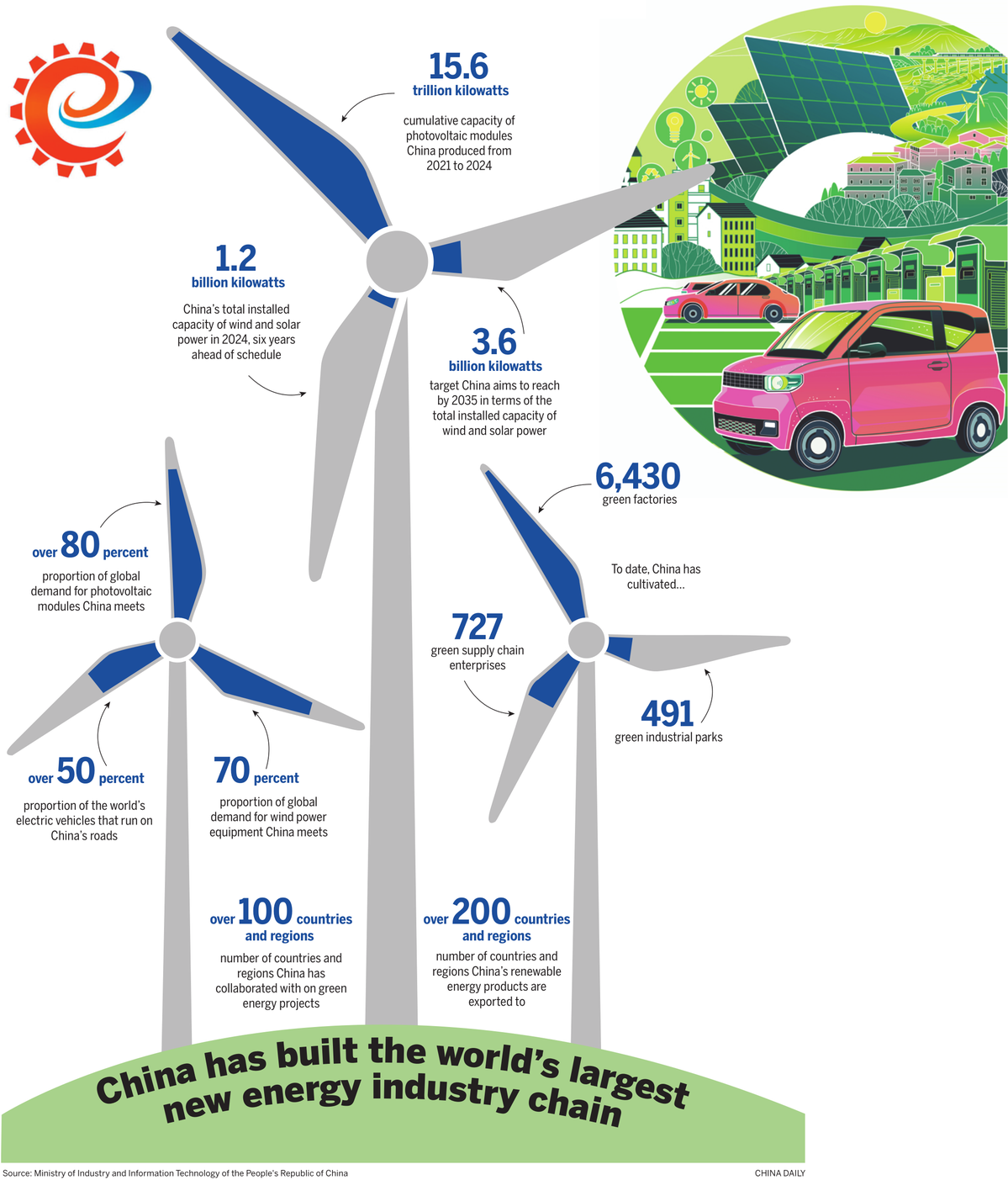
II. Global Value: China's Green Contributions to the World
Chinese manufacturing provides practical pathways for the global green transition by offering high-quality green technologies and products. Exports of renewable energy products cover over 200 countries and regions, meeting more than 80% of global photovoltaic module demand and 70% of wind power equipment needs. This assists countries, especially developing nations, in accessing clean, reliable, and affordable energy. Furthermore, China has engaged in green energy project cooperation with over a hundred countries and regions, promoting the popularization of green electricity and providing practical case studies for synergistic development between global climate governance and economic growth.
III. Future Direction: Systematic Advancement of Green Transformation
Moving forward, the green transformation of China's manufacturing sector will focus on three core directions to drive systematic upgrading:
-
Building a Green Industrial System: Promoting the optimization of product structure and production processes in traditional industries such as steel, building materials, and chemicals, and scaling up the application of innovative technologies; vigorously developing green industries like environmental protection and new energy equipment; and strategically developing future industries such as hydrogen energy, energy storage, and bio-manufacturing to solidify the foundation for green development.
-
Improving Green Supply Chain Construction: Leading with large enterprises to drive the green upgrade of upstream and downstream suppliers through green procurement, auditing, and supply chain financing; strengthening the cultivation of green factories and procurement cooperation; deepening international collaboration on green supply chains; and advancing the decarbonization of the global supply chain.
-
Deepening International Cooperation for Mutual Benefit: Leveraging bilateral and multilateral cooperation mechanisms to strengthen global collaboration in green technology, equipment, trade, and standards; encouraging enterprises to expand overseas green energy projects; facilitating the implementation of green infrastructure and transportation solutions; and participating in the formulation of international low-carbon rules to share green market opportunities.
IV. Industry Practice: The Core Role of Industrial Electrics and Renewable Energy
In the process of green transformation, the fields of industrial electric controllers and renewable energy equipment play a critical supporting role. Renewable energy equipment, such as photovoltaic water pump inverters, assists agricultural irrigation and rural water supply scenarios in achieving energy self-sufficiency and low-carbon operation through efficient energy conversion and smart control technologies. Industrial electric controllers, through precise regulation and energy-saving optimization, enhance the operating efficiency of traditional and new energy industries, reducing energy consumption and carbon emissions, making them core components in the green transformation of manufacturing.
Green development is a global consensus and an inevitable direction for industrial upgrading. Chinese manufacturing is practicing its low-carbon commitment through systematic transformation, and the industrial electric and renewable energy sectors will continue to focus on technological innovation, deepen green practices, and join hands with global partners to build a greener, more inclusive, and sustainable future.